Thursday, May 2, 2019

Pain Patients Sample Civil Rights Complaint U.S. Department of Health and Human Services

If you feel you have been discriminated against by a pain management physician, please file a complaint with U.S. Department of Health and Human Services Office for Civil Rights. If your pain medications were force tapered or stopped all together with little to no justification, file a complaint.

Recently a settlement between the United States of America and Selma Medical Associates Inc. under the Americans with Disabilities Act DJ # 202-80-64  

Civil Rights Complaint Sample

U.S. Department of Health and Human Services
Office for Civil Rights
Disability Rights Section
200 Independence Avenue, SW
Room 509F, HHH Building
Washington, D.C. 20201

Civil Rights Complaint RE: Dr Benjamin 
123 That Street
Ft Mohave, AZ 86426

I was a patient of Dr Venger  from 2010 to 2017 including several months working as his compliance officer. I feel by reducing my pain medication without medical justification Dr Venger  caused significant pain and suffering, lowered my ability to function and decreased my quality of life

Dr Venger  discriminated against me by failing to provide services or items reasonable and necessary for the diagnosis and treatment of chronic pain from injury and to improve my functioning and quality of life.

By reducing my level of narcotic pain medication including morphine without medical justification Dr Venger  failed to alleviate severe pain by not taking into account my physical dependence and tolerance to opioids and therefore failed to take reasonable and necessary steps to prevent significant disability and alleviate severe pain.

The across the board reduction of opioid pain medications by Dr Venger failed to consider the medical needs of the individual patient causing significant pain and suffering for me as well as other patients who were being treated with pain medications including controlled substances narcotics.

Arizona Medical Board Complaint MD-17-0722A
In July 2017 I filed complaint number MD-17-0722A with the Arizona Medical Board. Before becoming disabled I spent a number of years in law enforcement working undercover narcotics. Because of my background I recorded visits with Dr Venger so there was no discrepancy on what was said during visits. I included the audio recordings in my complaint to the Arizona Medical Board.


 I feel I was discriminated against by may pain management physician and here is a copy of my complaint. If you feel your physician did the wrong thing by reducing or stopping your pain medications, file a complaint.

I hope it helps.

Jay


CDC Say it's Opioid Guideline Should Not Be Used to Abruptly Taper or Suddenly Discontinue Opioids

The Pain News Network Reports CDC Back Peddles on Opioid Guideline............

The authors of the 2016 CDC opioid guideline say it should not be used to abruptly taper or suddenly discontinue opioid pain medication. The agency's long awaited "clarification" was cheered by some patient advocates, while others wondered why it took the CDC so long to act amid widespread reports of patient harm.

It's not clear what the CDC will do next to address the misapplication of the guideline by states, doctors, insurers, pharmacists and law enforcement agencies.


READ the Whole Story HERE


Thursday, April 11, 2019

TWO FEDERAL AGENCIES SPEAK AGAINST MANDATED OR PRECIPITOUS OPIOID REDUCTIONS IN CHRONIC PAIN PATIENTS

FOR IMMEDIATE RELEASE APRIL 10, 2019

TWO FEDERAL AGENCIES SPEAK AGAINST MANDATED OR PRECIPITOUS OPIOID REDUCTIONS IN CHRONIC PAIN PATIENTS 

On April 10, the Director for the Centers for Disease Control and Prevention, Dr. Robert Redfield, wrote to Health Professionals for Patients in Pain (HP3) to state that the CDC’s 2016 Guideline offered no support for mandatory opioid dose reductions in patients with long-term pain. Coming on the heels of an April 9 warning from the United States Food and Drug Administration of “serious harm” to patients after rapid dose reduction or discontinuation, the Director’s letter flags the need for a recalibration of care decisions imposed by a wide range of private and governmental agencies that have invoked the CDC to justify coverage restrictions, quality metrics, legal threats and other actions to force dose reductions on nonconsenting patients.

READ MORE 

Wednesday, April 10, 2019

The Blue Balloon Campaign


The Blue Balloon Campaign

for humane laws and policies in the treatment of chronic and severe pain


FDA identifies harm reported from sudden discontinuation of opioid pain medicines

FDA identifies harm reported from sudden discontinuation of opioid pain medicines and requires label changes to guide prescribers on gradual, individualized tapering


Safety Announcement READ FDA PAGE HERE

4-9-2019] The U.S. Food and Drug Administration (FDA) has received reports of serious harm in patients who are physically dependent on opioid pain medicines suddenly having these medicines discontinued or the dose rapidly decreased. These include serious withdrawal symptoms, uncontrolled pain, psychological distress, and suicide.
While we continue to track this safety concern as part of our ongoing monitoring of risks associated with opioid pain medicines, we are requiring changes to the prescribing information for these medicines that are intended for use in the outpatient setting. These changes will provide expanded guidance to health care professionals on how to safely decrease the dose in patients who are physically dependent on opioid pain medicines when the dose is to be decreased or the medicine is to be discontinued.
Rapid discontinuation can result in uncontrolled pain or withdrawal symptoms. In turn, these symptoms can lead patients to seek other sources of opioid pain medicines, which may be confused with drug-seeking for abuse. Patients may attempt to treat their pain or withdrawal symptoms with illicit opioids, such as heroin, and other substances.
Opioids are a class of powerful prescription medicines that are used to manage pain when other treatments and medicines cannot be taken or are not able to provide enough pain relief. They have serious risks, including abuse, addiction, overdose, and death. Examples of common opioids include codeine, fentanyl, hydrocodone, hydromorphone, morphine, oxycodone, and oxymorphone.
Health care professionals should not abruptly discontinue opioids in a patient who is physically dependent. When you and your patient have agreed to taper the dose of opioid analgesic, consider a variety of factors, including the dose of the drug, the duration of treatment, the type of pain being treated, and the physical and psychological attributes of the patient. No standard opioid tapering schedule exists that is suitable for all patients. Create a patient-specific plan to gradually taper the dose of the opioid and ensure ongoing monitoring and support, as needed, to avoid serious withdrawal symptoms, worsening of the patient’s pain, or psychological distress (For tapering and additional recommendations, see Additional Information for Health Care Professionals).
Patients taking opioid pain medicines long-term should not suddenly stop taking your medicine without first discussing with your health care professional a plan for how to slowly decrease the dose of the opioid and continue to manage your pain. Even when the opioid dose is decreased gradually, you may experience symptoms of withdrawal (See Additional Information for Patients). Contact your health care professional if you experience increased pain, withdrawal symptoms, changes in your mood, or thoughts of suicide.
We are continuing to monitor this safety concern and will update the public if we have new information. Because we are constantly monitoring the safety of opioid pain medicines, we are also including new prescribing information on other side effects including central sleep apnea and drug interactions. We are also updating information on proper storage and disposal of these medicines that is currently available on our
Disposal of Unused Medicines webpage.
To help FDA track safety issues with medicines, we urge patients and health care professionals to report side effects involving opioids or other medicines to the FDA MedWatch program, using the information in the “Contact FDA” box at the bottom of the page.

Friday, March 29, 2019

Any Positive Change - AZ Harm Reduction Conference 2019

I'm in Phoenix today for Arizona's first Harm Reduction Conference Any Positive Change 2019 at Black Canyon Conference Center in Phoenix.

As I attend harm reduction events I remind those who attend that the people who abuse opioids aren't the only victims of the opioid crisis.

Pain patients are victims too. Patients by the thousands have been forced tapered off medications they've used for many years forcing some to turn to the streets, and others to simply end the pain.

If someone abuses opioids and overdose it's sad. If a pain patient ends their life for lack of pain control, it's a tragedy 

Arizona legislators passed the Arizona Opioid Epidemic Act limiting the dose a pain patient can receive, but there is no limit on dose for those who choose to abuse opioids.


Monday, March 25, 2019

Study Finds 90% of Medicare Patients Have Little Risk of Opioid Overdose

Study Finds 90% of Medicare Patients Have Little Risk of Opioid Overdose

By Pat Anson, PNN Editor

Current methods used to identify Medicare patients at high risk of overdosing on prescription opioids target many people who are not really at high risk, according to a team of researchers who found that over 90% of patients have little to no risk of overdosing. 

The computer models developed three risk groups that predict which patients are at risk of overdosing over a 12 month period.

·         Low risk patients (67.5%) have 0.006% risk of overdose
·         Medium risk patients (23.3%) have 0.05% risk of overdose
·         High risk patients (9.1%) have 1.77% risk of overdose

Put another way, out of 100,000 Medicare patients in the low risk group, six would have an overdose; while there would be 1,770 overdoses in a high risk group of the same size

Sunday, March 17, 2019

Some Brave Physicians Stand Up for Pain Patients, Some Brave Reporters Tell the Truth About Opioids

 Some Brave Reporters are Telling the Truth About Opioids

Some brave reporters like George Knapp an investigative reporter for the Channel-8's I-Team tell the truth about opioids and pain patients in stories like his I-TEAM report on Opioid Addiction Versus Dependency

When the 2016 CDC Guideline for Prescribing Opioids for Chronic Pain came out most of the pain management physicians in my area misunderstood that: 
1. they were guidelines and not a rule, regulation, or law.
2. the guidelines were for Primary Care Physicians and NOT pain management.

In Northern Arizona I was unable to find one, not one pain management physician who understood the 2018 Arizona Opioid Epidemic Act 

Every so called pain management physician I contacted told me they were limited by the 90 or 120 mg MME limit. Read the law, that's not what the law says... 

Is it they can't read and understand the law? Or are they so afraid of the government they're willing to violate their oath to do no harm and let patients suffer and die in pain?

Could you? Could you watch someone suffer in pain if you had the power to lessen their suffering? Could you? If you had the power to allow someone in pain to get up and get out of their house, to do things that improve their quality of life. Could you? Could you just watch them suffer in pain?

The legislature put protections in the  2018 Arizona Opioid Epidemic Act to protect current chronic patients, but physicians simply ignore these protections. Even when I hand them this email from Governor Ducey's Office outlining the protections.


They read the governors email and actually say, "I'm not going to break the law". When I tell them this is the law, they just say "I'm not going to break the law".... 

Many of the current problems with pain patients turning to street drugs and overdosing are caused because physicians refused to follow the protections the legislature placed in the Arizona Opioid Epidemic Act to protect current pain patients.

It was well known that forced tapering of current pain patients who had built a tolerance to opioid pain medications over years of use would have no choice but turn to the street if doses were reduced too low.

Some Brave Physicians Stand Up for Pain Patients

Dr Marx is one of a hand full of pain management specialists who understand pain management are standing up for pain patients. 

In the I-TEAM story Opioid Addiction Versus Dependency 
Dr. Marx says pain patients do develop a dependence on their medication, but they can take it basically forever without harm it allows them to keep their jobs, remain active, have a life. Those who've had their meds cut have suffered terribly, and many have committed suicide. Their need for medication is not addiction

"Dependence is not addiction," Ziegler said. "Withdrawal is not addiction. Addiction is a completely separate matter. As lot of people can be managed well on prescription therapy. For those who can be managed well, why are you trying to change their treatment?"

WATCH: Opioid Crisis - Reporter George Knapp's complete interview with Dr. Stephen Ziegler


Sunday, March 10, 2019

People Selling Illegal Opioids Get a Warning Letter from FDA - DEA Raids Physician for Prescribing Them?

FDA News Release FDA takes action against 53 websites marketing unapproved opioids as part of a comprehensive effort to target illegal online sales.

"The U.S. Food and Drug Administration today (June 5th 2018) announced that it has warned nine online networks, operating a total of 53 websites, that they must stop illegally marketing potentially dangerous, unapproved and misbranded versions of opioid medications, including tramadol and oxycodone". 


"Companies who fail to correct the violations, as outlined in the warning letters, may be subject to enforcement action, including product seizure or injunction".


Opioid Epidemic? Where's DEA?
 These guys are selling illegal opioid medications, including tramadol and oxycodone and they get "warning letters". 

Why isn't DEA kicking down their doors? They "may be subject to enforcement action", and what enforcement "product seizure or injunction".

People selling oxycodone get a warning letter from the FDA while DEA agents with automatic weapons raid 77 year old Dr Forest Tennant's office and home. 

Patients need to read about Dr Forest Tennant. He's one of the nations leading pain specialists who has done a lot of research into pain management. Dr Tennant had his home and office raided by DEA recently. LINK DEA Raids Dr Tennant 

In the article Dr Tennant say's 
“They’re not just going after me, they’re going after patients,"  “I think the country better understand what they’re doing here. They’re saying that regulations don’t count, standards don’t count, and they’ll decide who can get drugs and how much.

If you're doing research on pain management look at Dr Tennant's 
Pain Management Articles


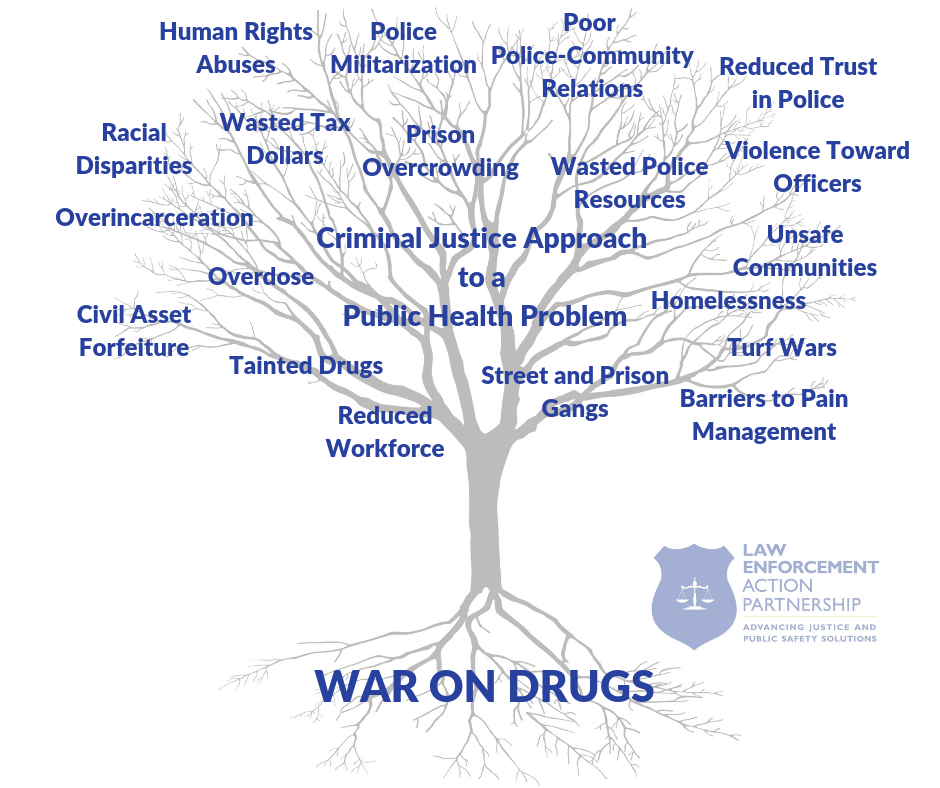
The Law Enforcement Action Partnership


The Law Enforcement Action Partnership


The Law Enforcement Action Partnership’s mission is to unite and mobilize the voice of law enforcement in support of drug policy and criminal justice reforms that will make communities safer by focusing law enforcement resources on the greatest threats to public safety, promoting alternatives to arrest and incarceration, addressing the root causes of crime, and working toward healing police-community relations.

Friday, March 8, 2019

Methamphetamine use climbing among opioid users... Really

Methamphetamine use climbing among opioid users

Tuesday, March 5, 2019

Truth Or DARE a collection of data counter to the war on drugs narrative

A new page telling the truth about the opioid epidemic and our nations war on drugs everyone needs to read..

Truth Or DARE
a collection of data counter to the war on drugs narrative


Saturday, March 2, 2019

A Little Prediction of Next Drug Epidemic..... Cocaine

In 2017 the Washington Post ran an article "American cocaine use is way up. Colombia’s coca boom might be why" LINK to Article

I also recently read some of the governments crop reports that coca in recent years have been going up dramatically.

Mexican drug cartels are always years ahead of DEA on production and marketing. After all they are marketing experts making enough money to control most of the Mexican Government.

Mark my words the next big drug "epidemic" is coming and it going to be Cocaine and it's going to be big......


Friday, March 1, 2019

Were You Given Toradol in the Emergency Department Rather than Opioids and Have a BAD Reaction?


Toradol in Place of Opioid Pain Medications isn't a good idea. While at the KRMC ER several months ago I overhead several patients who came to the ER for some type of pain being given Toradol rather than an opioid pain medication.

I know how dangerous Toradol is. I was given Toradol back in the 90’s when like today doctors would give you anything rather than an opioid pain medication. Two days later my stomach was really messed up, I was throwing up blood and ended up back in the ER with IV’s to stop the bleeding.

If you know someone who was given Toradol rather than pain medications and had a serious side effect like ulcers, gastrointestinal bleeding or perforation of the stomach or intestines.

PLEASE FILE A COMPLAINT with Arizona Medical Board


Both Toradol and Morphine have Black Box Warnings


Black Box Warning
A black box warning is the strictest warning put in the labeling of prescription drugs or drug products by the Food and Drug Administration (FDA) when there is reasonable evidence of an association of a serious hazard with the drug. Having the black box around the warning means that an adverse reaction to the drug may lead to death or serious injury

Black Box Warning Toradol.
Appropriate Use
for short term (up to 5 days in adults) tx of moderately severe acute pain requiring opioid-level analgesia and only as continuation of parenteral tx, if necessary; total combined duration should not exceed 5 days; not indicated for minor or chronic pain; oral tx not indicated in peds; max recommended total daily dose 40 mg PO and 120 mg IV/IM; doses above label recommendations incr. serious adverse event risk w/o improved efficacy
GI Risk
incr. serious GI adverse event risk, incl. bleeding, ulcer, and stomach or intestine perforation, which can be fatal; may occur at any time during use and w/o warning sx; elderly pts at greater risk for serious GI events; contraindicated in active PUD, recent GI bleeding or perforation, and PUD or GI bleeding hx
Cardiovascular Risk
NSAIDs incr. risk of serious and potentially fatal cardiovascular thrombotic events, incl. MI, and stroke; risk may occur early in tx and may incr. w/ duration of use; contraindicated for CABG peri-operative pain
Renal Risk
contraindicated if adv. renal impairment or if renal failure risk due to volume depletion
Bleeding Risk
contraindicated if suspected or confirmed cerebrovascular bleeding, hemorrhagic diathesis, incomplete hemostasis, or high bleeding risk because inhibits platelet fxn; contraindicated as prophylactic analgesic before major surgery
Labor/Delivery Risk
contraindicated in labor/delivery because may adversely affect fetal circulation and inhibit uterine contractions
Concomitant NSAID Use
contraindicated in combo w/ ASA or NSAIDs due to cumulative risk of serious NSAID-related side effects
Intrathecal/Epidural Use
contraindicated due to alcohol content
Hypersensitivity Rxn
hypersensitivity rxns range from bronchospasmqq to anaphylactic shock, have appropriate tx available; contraindicated if previous ketorolac, ASA, or other NSAID hypersensitivity rxn
Special Populations
max total daily dose 60 mg IV/IM in pts 65 yo and older, if wt <50 kg, or moderately elevated Cr; max single dose 30 mg IM and 15 mg IV in peds pts

Black Box Warning Morphine.

Appropriate Use

ER form should only be prescribed by healthcare professionals knowledgeable in use of potent opioids for chronic pain management; reserve extended-release and long-acting formulations for pts w/o tx alternatives; ER form not indicated for prn analgesic use; proper dosing and titration essential to decr. resp. depression risk

Medication Error Risk

ensure accuracy when prescribing, dispensing, and administering morphine oral solution; dosing errors due to confusion between mg and mL or different concentrations can result in accidental overdose and death; morphine concentrated oral solution (100 mg per 5 mL) indicated only in opioid-tolerant pts

Addiction, Abuse, and Misuse

opioid agonist Schedule II controlled substance w/ risk of addiction, abuse, and misuse, which can lead to overdose and death; reserve opioid analgesics for pts w/ inadequate tx alternatives; assess opioid abuse or addiction risk prior to prescribing; regularly monitor all pts for misuse, abuse, and addiction

Opioid Analgesic REMS

FDA required risk evaluation and mitigation strategy (REMS) program to ensure benefits outweigh risks; REMS-compliant education program must be avail to healthcare providers; providers are strongly encouraged to complete REMS-compliant program, counsel pts and/or caregivers w/ each Rx on safe use, serious risks, storage, and disposal, emphasize importance of reading med guide, and consider other tools to improve pt, household, and community safety

Respiratory Depression

serious, life-threatening, or fatal cases may occur even w/ recommended use; monitor for resp. depression esp. during tx start or after dose incr; instruct pts to swallow ER tabs whole; crushing, dissolving, or chewing ER tabs can cause rapid release and absorption of potentially fatal morphine dose; instruct pts to swallow ER caps whole or sprinkle contents on applesauce and swallow immed. w/o chewing; crushing, dissolving, or chewing pellets w/in ER cap can cause rapid release and absorption of potentially fatal morphine dose

Accidental Ingestion

accidental ingestion of even one dose, esp. by children, can result in fatal morphine overdose

Neonatal Opioid Withdrawal Syndrome

prolonged maternal use of opioid tx during pregnancy can lead to potentially life-threatening neonatal opioid withdrawal syndrome; infants may require tx according to neonatology protocols; advise pregnant pts of risks and ensure appropriate tx avail. if prolonged opioid use required

Avoid Alcohol

instruct pts using ER caps not to consume alcoholic beverages or use alcohol-containing prescription or non-prescription medications; alcohol consumption during tx may result in incr. plasma levels and potentially fatal morphine overdose

Risks from Concomitant Use w/ Benzodiazepines, CNS Depressants

concomitant opioid use w/ benzodiazepines or other CNS depressants, incl. alcohol, may result in profound sedation, resp. depression, coma, and death; reserve concomitant use for pts w/ inadequate alternative tx options; limit to minimum required dosage and duration; monitor pts for s/sx of resp. depression and sedation

Tuesday, February 26, 2019

Las Vegas Dr Gregory Talks about Opioids with I-Team Reporter George Knapp

WEB EXTRA: Dr. Maurice Gregory talks about opioid

LAS VEGAS - Las Vegas physician Doctor Maurice Gregory talks with I-Team reporter George Knapp about his concerns regarding the anti-opioid movement and how it's impacted the quality of life for patients who need long-term pain management.

Please let George Knapp ( gknapp@lasvegasnow.com) and Ian Russell, Producer,  (irussell@lasvegasnow.com)
know how much you appreciate their extraordinary efforts in bringing the pain patients plight into the light.  The patients on opioid pain meds and their doctors face ever mounting challenges to helping their patients to have a quality of life.
best,
Rick Martin,  Pharmacist

Wednesday, February 20, 2019

Heading to Phoenix to Talk to Legislators about Syringe Service Programs


I'm heading to Phoenix today to speak to legislators about HB 2148 Syringe Service Programs

Dirty needles are a problem that impacts all first responders including law enforcement, firefighters, and EMS personal. I live in Mohave County where we have a serious problem with illicit opioid use.

Syringe Service Programs take dirty needles off the streets keeping our police officers, firefighters, EMS personal safer, and the community as a whole safer. Syringe Service Programs are shown to reduce an officer’s chance of a needle stick reducing their chance of being exposed to communicable diseases like Hepatitis C, HIV, and AIDS.

People who inject drugs dispose of syringes in places like dumpsters, on the street, or in bushes. These can result in accidental needle sticks for law enforcement. This is especially a problem in Arizona where possession of a syringe can mean arrest and serious charges.

According to a recent report by the CDC, one in three officers may be stuck with a needle during their career. This puts officers at risk of contracting one or more of the communicable diseases associated with drug abuse.

A study of Connecticut police officers found that needle stick injuries were reduced by two-thirds after implementing Syringe Service Programs. 

These programs not only provide intravenous drug users a place to safely dispose of dirty needles. It allows us to reach those in our communities that are hardest to reach allowing us to offer lifesaving services like treatment, housing, food, and other social services diverting them away from criminal activity.

I spent 12 years working undercover, not one drug dealer ever asked if I had a drug problem or wanted to get help, they only ask if I wanted to buy more drugs…

If we want to reduce drug use, keep our communities safer while keeping our police officers, firefighters, and EMS personal safe from needle sticks and communicable diseases a Syringe Service Program is a good way to start.


Thank you for your time.....