Sunday, March 10, 2019

People Selling Illegal Opioids Get a Warning Letter from FDA - DEA Raids Physician for Prescribing Them?

FDA News Release FDA takes action against 53 websites marketing unapproved opioids as part of a comprehensive effort to target illegal online sales.

"The U.S. Food and Drug Administration today (June 5th 2018) announced that it has warned nine online networks, operating a total of 53 websites, that they must stop illegally marketing potentially dangerous, unapproved and misbranded versions of opioid medications, including tramadol and oxycodone". 


"Companies who fail to correct the violations, as outlined in the warning letters, may be subject to enforcement action, including product seizure or injunction".


Opioid Epidemic? Where's DEA?
 These guys are selling illegal opioid medications, including tramadol and oxycodone and they get "warning letters". 

Why isn't DEA kicking down their doors? They "may be subject to enforcement action", and what enforcement "product seizure or injunction".

People selling oxycodone get a warning letter from the FDA while DEA agents with automatic weapons raid 77 year old Dr Forest Tennant's office and home. 

Patients need to read about Dr Forest Tennant. He's one of the nations leading pain specialists who has done a lot of research into pain management. Dr Tennant had his home and office raided by DEA recently. LINK DEA Raids Dr Tennant 

In the article Dr Tennant say's 
“They’re not just going after me, they’re going after patients,"  “I think the country better understand what they’re doing here. They’re saying that regulations don’t count, standards don’t count, and they’ll decide who can get drugs and how much.

If you're doing research on pain management look at Dr Tennant's 
Pain Management Articles


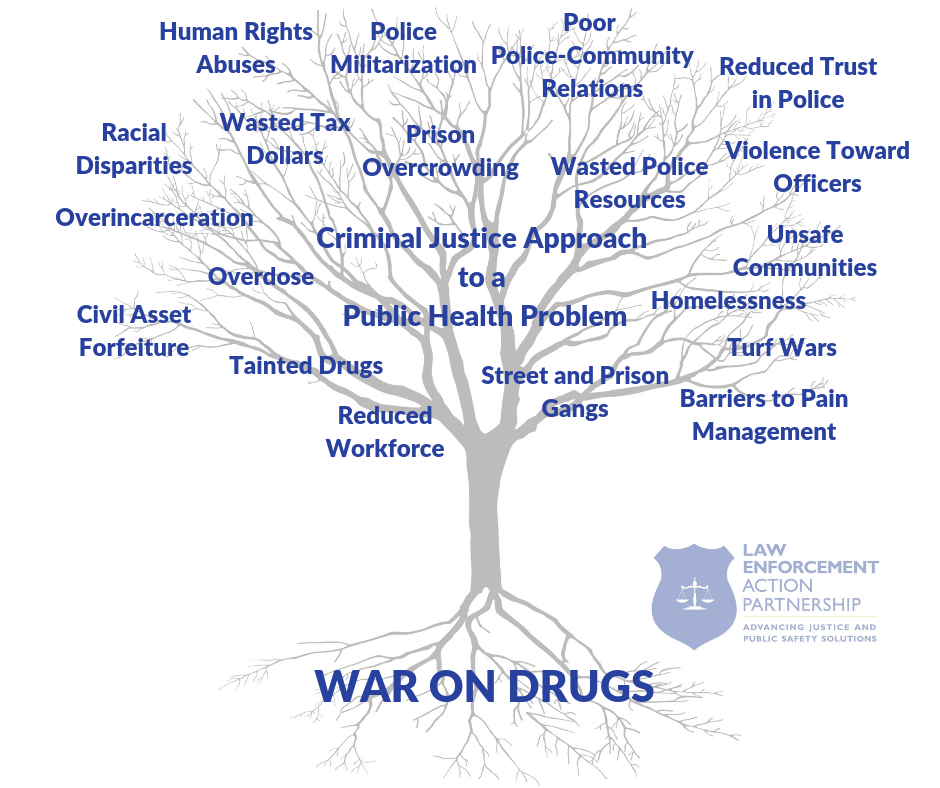
The Law Enforcement Action Partnership


The Law Enforcement Action Partnership


The Law Enforcement Action Partnership’s mission is to unite and mobilize the voice of law enforcement in support of drug policy and criminal justice reforms that will make communities safer by focusing law enforcement resources on the greatest threats to public safety, promoting alternatives to arrest and incarceration, addressing the root causes of crime, and working toward healing police-community relations.

Friday, March 8, 2019

Methamphetamine use climbing among opioid users... Really

Methamphetamine use climbing among opioid users

Tuesday, March 5, 2019

Truth Or DARE a collection of data counter to the war on drugs narrative

A new page telling the truth about the opioid epidemic and our nations war on drugs everyone needs to read..

Truth Or DARE
a collection of data counter to the war on drugs narrative


Saturday, March 2, 2019

A Little Prediction of Next Drug Epidemic..... Cocaine

In 2017 the Washington Post ran an article "American cocaine use is way up. Colombia’s coca boom might be why" LINK to Article

I also recently read some of the governments crop reports that coca in recent years have been going up dramatically.

Mexican drug cartels are always years ahead of DEA on production and marketing. After all they are marketing experts making enough money to control most of the Mexican Government.

Mark my words the next big drug "epidemic" is coming and it going to be Cocaine and it's going to be big......


Friday, March 1, 2019

Were You Given Toradol in the Emergency Department Rather than Opioids and Have a BAD Reaction?


Toradol in Place of Opioid Pain Medications isn't a good idea. While at the KRMC ER several months ago I overhead several patients who came to the ER for some type of pain being given Toradol rather than an opioid pain medication.

I know how dangerous Toradol is. I was given Toradol back in the 90’s when like today doctors would give you anything rather than an opioid pain medication. Two days later my stomach was really messed up, I was throwing up blood and ended up back in the ER with IV’s to stop the bleeding.

If you know someone who was given Toradol rather than pain medications and had a serious side effect like ulcers, gastrointestinal bleeding or perforation of the stomach or intestines.

PLEASE FILE A COMPLAINT with Arizona Medical Board


Both Toradol and Morphine have Black Box Warnings


Black Box Warning
A black box warning is the strictest warning put in the labeling of prescription drugs or drug products by the Food and Drug Administration (FDA) when there is reasonable evidence of an association of a serious hazard with the drug. Having the black box around the warning means that an adverse reaction to the drug may lead to death or serious injury

Black Box Warning Toradol.
Appropriate Use
for short term (up to 5 days in adults) tx of moderately severe acute pain requiring opioid-level analgesia and only as continuation of parenteral tx, if necessary; total combined duration should not exceed 5 days; not indicated for minor or chronic pain; oral tx not indicated in peds; max recommended total daily dose 40 mg PO and 120 mg IV/IM; doses above label recommendations incr. serious adverse event risk w/o improved efficacy
GI Risk
incr. serious GI adverse event risk, incl. bleeding, ulcer, and stomach or intestine perforation, which can be fatal; may occur at any time during use and w/o warning sx; elderly pts at greater risk for serious GI events; contraindicated in active PUD, recent GI bleeding or perforation, and PUD or GI bleeding hx
Cardiovascular Risk
NSAIDs incr. risk of serious and potentially fatal cardiovascular thrombotic events, incl. MI, and stroke; risk may occur early in tx and may incr. w/ duration of use; contraindicated for CABG peri-operative pain
Renal Risk
contraindicated if adv. renal impairment or if renal failure risk due to volume depletion
Bleeding Risk
contraindicated if suspected or confirmed cerebrovascular bleeding, hemorrhagic diathesis, incomplete hemostasis, or high bleeding risk because inhibits platelet fxn; contraindicated as prophylactic analgesic before major surgery
Labor/Delivery Risk
contraindicated in labor/delivery because may adversely affect fetal circulation and inhibit uterine contractions
Concomitant NSAID Use
contraindicated in combo w/ ASA or NSAIDs due to cumulative risk of serious NSAID-related side effects
Intrathecal/Epidural Use
contraindicated due to alcohol content
Hypersensitivity Rxn
hypersensitivity rxns range from bronchospasmqq to anaphylactic shock, have appropriate tx available; contraindicated if previous ketorolac, ASA, or other NSAID hypersensitivity rxn
Special Populations
max total daily dose 60 mg IV/IM in pts 65 yo and older, if wt <50 kg, or moderately elevated Cr; max single dose 30 mg IM and 15 mg IV in peds pts

Black Box Warning Morphine.

Appropriate Use

ER form should only be prescribed by healthcare professionals knowledgeable in use of potent opioids for chronic pain management; reserve extended-release and long-acting formulations for pts w/o tx alternatives; ER form not indicated for prn analgesic use; proper dosing and titration essential to decr. resp. depression risk

Medication Error Risk

ensure accuracy when prescribing, dispensing, and administering morphine oral solution; dosing errors due to confusion between mg and mL or different concentrations can result in accidental overdose and death; morphine concentrated oral solution (100 mg per 5 mL) indicated only in opioid-tolerant pts

Addiction, Abuse, and Misuse

opioid agonist Schedule II controlled substance w/ risk of addiction, abuse, and misuse, which can lead to overdose and death; reserve opioid analgesics for pts w/ inadequate tx alternatives; assess opioid abuse or addiction risk prior to prescribing; regularly monitor all pts for misuse, abuse, and addiction

Opioid Analgesic REMS

FDA required risk evaluation and mitigation strategy (REMS) program to ensure benefits outweigh risks; REMS-compliant education program must be avail to healthcare providers; providers are strongly encouraged to complete REMS-compliant program, counsel pts and/or caregivers w/ each Rx on safe use, serious risks, storage, and disposal, emphasize importance of reading med guide, and consider other tools to improve pt, household, and community safety

Respiratory Depression

serious, life-threatening, or fatal cases may occur even w/ recommended use; monitor for resp. depression esp. during tx start or after dose incr; instruct pts to swallow ER tabs whole; crushing, dissolving, or chewing ER tabs can cause rapid release and absorption of potentially fatal morphine dose; instruct pts to swallow ER caps whole or sprinkle contents on applesauce and swallow immed. w/o chewing; crushing, dissolving, or chewing pellets w/in ER cap can cause rapid release and absorption of potentially fatal morphine dose

Accidental Ingestion

accidental ingestion of even one dose, esp. by children, can result in fatal morphine overdose

Neonatal Opioid Withdrawal Syndrome

prolonged maternal use of opioid tx during pregnancy can lead to potentially life-threatening neonatal opioid withdrawal syndrome; infants may require tx according to neonatology protocols; advise pregnant pts of risks and ensure appropriate tx avail. if prolonged opioid use required

Avoid Alcohol

instruct pts using ER caps not to consume alcoholic beverages or use alcohol-containing prescription or non-prescription medications; alcohol consumption during tx may result in incr. plasma levels and potentially fatal morphine overdose

Risks from Concomitant Use w/ Benzodiazepines, CNS Depressants

concomitant opioid use w/ benzodiazepines or other CNS depressants, incl. alcohol, may result in profound sedation, resp. depression, coma, and death; reserve concomitant use for pts w/ inadequate alternative tx options; limit to minimum required dosage and duration; monitor pts for s/sx of resp. depression and sedation

Tuesday, February 26, 2019

Las Vegas Dr Gregory Talks about Opioids with I-Team Reporter George Knapp

WEB EXTRA: Dr. Maurice Gregory talks about opioid

LAS VEGAS - Las Vegas physician Doctor Maurice Gregory talks with I-Team reporter George Knapp about his concerns regarding the anti-opioid movement and how it's impacted the quality of life for patients who need long-term pain management.

Please let George Knapp ( gknapp@lasvegasnow.com) and Ian Russell, Producer,  (irussell@lasvegasnow.com)
know how much you appreciate their extraordinary efforts in bringing the pain patients plight into the light.  The patients on opioid pain meds and their doctors face ever mounting challenges to helping their patients to have a quality of life.
best,
Rick Martin,  Pharmacist

Wednesday, February 20, 2019

Heading to Phoenix to Talk to Legislators about Syringe Service Programs


I'm heading to Phoenix today to speak to legislators about HB 2148 Syringe Service Programs

Dirty needles are a problem that impacts all first responders including law enforcement, firefighters, and EMS personal. I live in Mohave County where we have a serious problem with illicit opioid use.

Syringe Service Programs take dirty needles off the streets keeping our police officers, firefighters, EMS personal safer, and the community as a whole safer. Syringe Service Programs are shown to reduce an officer’s chance of a needle stick reducing their chance of being exposed to communicable diseases like Hepatitis C, HIV, and AIDS.

People who inject drugs dispose of syringes in places like dumpsters, on the street, or in bushes. These can result in accidental needle sticks for law enforcement. This is especially a problem in Arizona where possession of a syringe can mean arrest and serious charges.

According to a recent report by the CDC, one in three officers may be stuck with a needle during their career. This puts officers at risk of contracting one or more of the communicable diseases associated with drug abuse.

A study of Connecticut police officers found that needle stick injuries were reduced by two-thirds after implementing Syringe Service Programs. 

These programs not only provide intravenous drug users a place to safely dispose of dirty needles. It allows us to reach those in our communities that are hardest to reach allowing us to offer lifesaving services like treatment, housing, food, and other social services diverting them away from criminal activity.

I spent 12 years working undercover, not one drug dealer ever asked if I had a drug problem or wanted to get help, they only ask if I wanted to buy more drugs…

If we want to reduce drug use, keep our communities safer while keeping our police officers, firefighters, and EMS personal safe from needle sticks and communicable diseases a Syringe Service Program is a good way to start.


Thank you for your time.....


Saturday, February 16, 2019

Why Counting Prescription Pills DOESN’T WORK The Headlines Always Sound Bad BUT....


The headlines sound really bad… “4 Mohave County doctors’ prescribed 6 million opioid pills in 1 year” https://www.azcentral.com/story/news/local/arizona-health/2017/11/09/four-top-15-opioid-doctors-prescribed-14-million-opioid-pill-prescriptions-1-year/822802001/

Imagine 6,000,000 pills in one county with a population of 200,000 people, WOW… We should have DEA throw them in prison for life, right… But wait…

Most pain medications like morphine, Vicoden, Percoden are all 4 hour medications requiring 6 per day, 180 month or 2160 per year.

Studies tell us 100,000,000 Americans suffer chronic pain at any one time. That’s around 1/3 of the US population. Mohave County’s population is 200,000 1/3rd is around 66500.

If only 1/10th of Mohave County’s estimated pain patients require an opioid that’s 6,650 patients. 2160 pills per year TIMES 6,650 patients = 14,364,000 pills per year. Fourteen Million Pills

If only 1/5th of Mohave County’s estimated pain patients require an opioid that’s 3,325 patients…2160 pills per year TIMES 3,325 patients = 7,182,000 pills per year. Seven Million Pills

So actually if these pain specialists are writing the majority of schedule II medications 6,000,000 is only enough for 2777 of the estimated 6,650 pain patients in Mohave County, and nowhere near the estimated 66,500 (1/3rd of MC’s 200,000) pain patients.

That’s why counting prescription pills sounds really bad... 
So always check the numbers....


Wednesday, February 13, 2019

Woman in cot testifies to Congress on opioids, chronic pain managemen

NBC News
By Frank Thorp V and Jane C. Timm
WASHINGTON — A woman with a severe chronic pain condition testified before Congress from a cot set up in the hearing room Tuesday, calling for more research and a smarter approach to pain management amid efforts to curb opioid abuse.
"The opioid crisis has only underscored our failure to provide adequate, safe, accessible treatment options for pain relief," Cindy Steinberg, the national director of policy and advocacy at the U.S. Pain Foundation, told members of the Senate Committee on Health, Education, Labor and Pensions.

LINK to STORY

Nevada Pain Physicians Fight for Patients.... Arizona Not So Much

I work with a group of pain management physicians in Nevada to fix the damage the CDC Pain Guidelines did to pain management. I find it sad that every Arizona pain physician I've talked to didn't understand the CDC Guidelines and failed to follow the Opioid Epidemic Act.

Update from a Friend to Patients
 The other day a hearing was held in D.C. of the Senate Health, Education, Labor and Pension Committee specifically to discuss “Managing Pain During the Opioid Crisis.” The panel, which includes Nevada Senator Jacky Rosen, heard from Cindy Steinberg, National Director of Policy and Advocacy for the U.S. Pain Foundation and Policy Chair of the Massachusetts Pain Initiative;  Helen Gazelka, M.D., Chair, Mayo Clinic Opioid Stewardship Program; Andrew Coop, PhD University of Maryland School of Pharmacy; and Anuradha Rao-Patel, M.D.,  Lead Medical Director for Blue Cross-Blue Shield of North Carolina. 

The primary question of the meeting was – should the federal government get into the business of determining maximum dosages for opioids -  and the answer was a resounding “no.”  Senator Murkowski from Alaska noted that her constituents are being denied legitimate prescriptions by their pharmacists, and others noted that the CDC guidelines are having severe unintended consequences in the form of primary care docs no longer prescribing at all, and many states not having adequate numbers of pain docs.  

There was lots of discussion regarding coverage for “complementary treatments” like acupuncture, PT, OT, aquatic therapy, injections, etc. but an acknowledgement that opioids can and should be available to those who need them.  

There were several statements to the effect that “there’s no evidence that opioids are effective for long term pain management” and those were summarily rejected by both Senators and two panelists (Ms. Steinberg and Dr. Coop).  Senator Bill Cassidy from Louisiana, a gastroenterologist who noted that there’s also “no evidence” that the epidural injections he received for his cervical issues were effective yet they were in fact effective for him.  So in other words – absence of evidence is not evidence of absence.

At the the end of the hearing - the panel was asked what should be done with the CDC guidelines - and while the Mayo Clinic representative stated that she used them extensively, all agreed that they have been mis-applied and should be revised.  I take that as very good news indeed.

Monday, February 11, 2019

The CDC Quietly Admits It Screwed Up Counting Opioid Pills

The CDC Quietly Admits It Screwed Up Counting Opioid Pills or "We at the CDC Really Screwed Up and Here is Our Pathetic Attempt to Disguise it"


Once again, it is apparent that deaths from opioids occur from abuse, not use.
The more you dig the more the numbers change, and it's always in the same direction - the number of overdose deaths from prescription opioid medications, when used properly, is far less than the bogus numbers that have been used by the CDC. Based on all these adjustments, it would not surprise me in the least if 90% of opioid overdose deaths were a result of illicit fentanyl and its analogs, heroin, and the combination of pharmaceutical opioid drugs with other drugs of abuse. Maybe more.
It should be entirely clear that pain patients who use these painkillers correctly and responsibly are not the people who are dying from overdoses. But they are dying - slowly - from having to live in misery that we wouldn't allow for our pets as the medicines they need to (barely) function are being forcibly taken away. 
It is 2018 and this is the United States. How did we ever get here?

Pain Patients and Your Civil RIghts

This week the Civil Rights Division of the Department of Justice (DOJ) signed a formal agreement with Selma Medical Associates, a large primary care practice in Virginia, that may open the door for people with chronic pain to regain their full access to medical care.
Selma Medical refused to schedule a new patient appointment for a man who was taking the addiction treatment drug Suboxone. He filed a civil rights complaint asserting that his rights were violated because has a disability.
According to the complaint, Selma Medical “regularly turns away prospective new patients who are treated with narcotic controlled substances such as Suboxone.”
The DOJ and Selma Medical settled the complaint out-of-court. The full agreement can be READ HERE
If you feel your rights have been violated as a disabled person, please file a complaint with the Civil Rights Division of the Department of Justice

https://www.painnewsnetwork.org/stories/2019/2/1/civil-rights-case-gives-hope-to-pain-patients

Monday, January 21, 2019

10 Changes That Could Actually Make A Difference in the Opioid Problem

Maia Szalavitz 10 Deep Systemic Changes That Could Actually Make A Difference in the Opioid Problem

The government had another knee jerk response to the opioid problem and everybody knew what the unintended consequences would be.... 

Now Maia Salavitz came up with 10 changes that really could make a difference...

LINK to Deep Systemic Changes 

Tuesday, December 18, 2018

Human Rights Watch: CDC Guideline Needs Revision

Human Rights Watch: CDC Guideline Needs Revision

By Pat Anson, PNN Editor
Federal and state efforts to reduce opioid prescribing have harmed pain patients across the country and caused many doctors to arbitrarily cutoff or taper patients who need opioid medication, according to a new report from Human Rights Watch.
The 109-page report -- “Not Allowed to Be Compassionate” -- highlights the many unintended consequences of the 2016 CDC opioid guideline, which discourages doctors from prescribing opioids for chronic pain. The report recommends the CDC revise the guideline to explicitly state that patents should not be involuntarily tapered off opioids and that some patients may require higher doses.
“Many individuals with chronic pain are being involuntarily tapered from essential medicines that are vital to their daily functioning, depriving them of their right to health,” the report found.

Wednesday, December 12, 2018

Please Read This Article on Chronic Pain and Suicide

It's the holidays and a lot of people have problems with depression this time of year. This year with doctors tapering pain medications I fear the problem will be worse than in recent years.

If you suffer chronic pain or know someone who does, please read this article. If you feel depressed please talk to someone.

Fox News Article
As doctors taper or end opioid prescriptions, many patients driven to despair, suicide 

If you're depressed and need someone to talk to please call
National Suicide Prevention Lifeline: 1-800-273-TALK (8255)
Talk to someone, anyone......


Tuesday, December 11, 2018

Doctors Call for Urgent Review of Opioid Tapering Policy

Doctors Call for Urgent Review of Opioid Tapering Policy
December 4th 2018

An open letter by healthcare professionals to the U.S. Department of Health and Human Services is warning that forced opioid tapering has led to “an alarming increase in reports of patient suffering and suicides” and calls for an urgent review of tapering policies at every level of healthcare.

LINK to Pain News Network Article

Saturday, November 17, 2018

I Don't Understand the Politics of Drug Deaths

Alcohol Kills More People than Opioids 
But It's NOT an Epidemic?

I don't understand the politics of drug deaths... 

Drugs that kill people fast like opioids are an epidemic and a priority for law enforcement. 
Drugs that kill more people, but kill them slowly are not a priority for anyone... 

The article below says 88,000 people a year die from alcohol. I fear another drug may kill more, because gastrointestinal disease is the 3rd leading cause of death in the U.S. and NSAID's are both sold over the counter and handed out like candy by physicians, I'm afraid the death toll from NSAID's may be higher than we think.

The USA Today article says "As opioid overdoses, which kill about 72,000 people a year, grabbed America's attention, the slower moving epidemic of alcohol accelerated, especially in Southern states and the nation's capital. About 88,000 people die each year from alcohol"

Alcohol Kills More People than Opioids

Friday, November 16, 2018

Kingman Harm Reduction Offers FREE Naloxone Here's How Make a Rugged Naloxone Kit

The Sonoran Prevention Works Kingman Harm Reduction office has free Naloxone clean needles and information on what street drugs contain fentanyl.

Kingman Harm Reduction is located at 3505 Western Ave Suite B in the Mohave Mental Health building, the entrance is to the left as you face the front doors of MMH. 

The Naloxone kits provided at Kingman Harm Reduction have two vials of 0.4 mg Naloxone, two syringes with needles attached. These kits are great and anyone who takes prescription opioid pain medications or who abuse ovoid street drugs should have several of these kits around and always carry them with you. 

I have Naloxone at home and carry a kit in the car. I was concerned having a kit rattling around in the glove compartment the vials could break or the bag become torn. 

So I made a rugged Naloxone kit I could throw in the glove compartment, a ladies purse, a backpack, or anything without worrying too much about it getting broken. 

Rugged Naloxone Kit
The Kingman Harm Reduction kit comes with syringes with needles attached. You'll need to replace these and I explain as we go. 

You need to go to your local pharmacy and talk to the pharmacist, get to know them. Explain what you're doing and ask for one of their large prescription bottles, and a couple syringes with separate needles. 

I found that two 3cc syringes and two needles fit in the prescription bottle that's 3.75" without the lid. This makes a small rugged Naloxone kit you can carry about anywhere.


Naloxone from Kingman Harm Reduction 

Syringes and syringes from pharmacy for Naloxone Kit


Rugged Naloxone Kit in 3.75" Prescription Bottle


WARNING 
Naloxone has a SHORT Half-Life The time it's effects last.....
When naloxone is given intravenously, it starts working within two minutes, and when it’s injected into a muscle, it works within five minutes. When Narcan nasal spray is used, it also works within two to five minutes. 

The effects of Narcan last anywhere from half an hour to an hour. For some people, multiple doses are required, because the length of action of opioids is longer than naloxone’s duration of action. 

What is the Naloxone AKA Narcan half-life? Narcan is metabolized in the liver, and studies have shown the half-life in adults to be anywhere from 30 to 81 minutes. 

In infants, the half-life is around 3.1 hours. Again, Narcan and any form of naloxone doesn’t have any effect if there are no opioids present in a person’s body. It doesn’t have the potential for abuse, and all that it does is reverse the effects of opioids including respiratory depression so that the person who has overdosed can resume normal breathing. LINK TO PAGE

Unlike the rumors some physicians are spreading people are NOT abusing naloxone! 

In 12 years working undercover narcotics I have never seen a drug addict spend half the day finding money, the other half looking for heroin, so they can shoot up and get high only to inject themselves with Naloxone.... 

In my experience as an EMT I've seen many pissed off drug addicts when given Naloxone by EMS because they ruined their high. The fact they were about to die doesn't seem to hit them until later....


Wednesday, November 14, 2018

NEW Pain Crisis in Mohave County, and America Facebook Page

Please Check Out My 

I'll be sharing pain news and information for the pain patient community

https://www.facebook.com/groups/PainCrisisinAmerica/

Tuesday, November 13, 2018

A Prescriber's Guide to the New Medicare Part D Opioid Overutilizaton Policies for 2019

If you suffer chronic pain and have Medicare Part D Please Read

Below are some comments from a patient advocate in Nevada about changes to Medicare Part D in January 2019.
It contains, from Medicare:  "A Prescriber's Guide" and a notice to insurers about 2019 Formulary-Level POS Safety Edits, which I find to have very important information.
I hope you find this information useful. I am sure most of you know about this already however the CMS newsletter is only a couple weeks old.  At the Alliance for the Treatment of Intractable Pain, we are giving this information out to pain patients across the country.  We are also trying to get the 2019 Call Letter edits suspended for 1 year.

A Prescriber's Guide to the New Medicare Part D Opioid Overutilizaton Policies for 2019

Page 3.  90mme is the threshold to ID potential high risk patients. Of significance, it says "This is not a prescribing limit" 
Page 5.  Palliative care is listed as one of the exemptions.
page 6.  The patient, the patient’s representative, or the physician or other prescriber, on the patient’s behalf, has the right to request a coverage determination for a drug(s) subject to the alert, including the right to request an expedited or standard coverage determination in advance of prescribing an opioid
Page 6   How else can a provider prepare for the new 2019 Medicare Part D over-utilization policies? To avoid a prescription being rejected at the pharmacy, prescribes may proactively request a coverage determination in advance of prescribing an opioid prescription  if the prescriber has assessed that the patient will need the full quantity written 

So what does this all mean?  Palliative care "should" be exempt. 
Find out in advance if the Medicare plan will even have a safety edit at 200mme.
A hard edit at 200mme is optional for the insurance companies. Request a coverage 
determination NOW. The patient can do this.  It does not have to be the doctor.
Personally, I already have a PA for 2019.  This "should" exclude me from having
a hard edit for above 200mme.

October 23, 2018 notice to sponsors
Additional Guidance on Contract Year 2019 Formulary Level Opioid POS Safety Edits
MME hard edit (optional) 
In 2019, sponsors will continue to have the flexibility to implement hard safety edits at a threshold of 200 MME or more, with or without prescriber/pharmacy counts. We remind sponsors that they may not use MME thresholds as prescribing limits.  They can only function as a threshold to trigger the edit, indicating potentially unsafe opioid use.

I believe this is a significant statement.

If an enrollee or their prescriber requests a coverage determination and the only issue in dispute is the MME, CMS expects the Part D sponsor to approve the request if the prescriber attests that the higher MME is medically necessary, and  not to apply additional requirements such as the execution of a pain management agreement. 

It seems to me this is quite significant.  The provider should be able, for instance, to just fax a copy
of this notice to the sponsor and simply say "I have reviewed the patient's history and attest the higher dose is medically necessary.  End of discussion.

Q5: Which beneficiaries should be excluded from the opioid safety edits? 
A5: Part D sponsors are expected to develop specifications that exclude beneficiaries who are residents of a long-term care facility, in hospice care or receiving palliative or end-of-life care, or being treated for active 
cancer-related pain from all of the opioid safety edits. Sponsors should use all information available to them to reasonably exclude these beneficiaries from triggering the edits at POS in the first place.  

(so should "someone" alert the sponsor in advance
that the patient is excluded because of say,   palliative care?)

Sponsors should also apply specifications to account for known exceptions
such as reasonable overlapping dispensing dates for prescription refills or new prescription orders for continuing fills; and high-dose opioid usage previously determined to be medically necessary such as through coverage determinations, prior authorization, case management, or appeal processes.

I've received a PA already through the end of 2019.  Does
this mean I am excluded already?  If everyone gets a PA, will it avoid the edit?  FYI, my "Medicare and You" handbook lists 10 part-D sponsors. 4 of them
DO NOT list fentanyl patch 100mcg requiring a PA.  ALL plans have an asterisk saying,  "Opioid pain meds are subject to additional safety review"

Under question 6 answer:
Pharmacists are not expected to do extra work contacting  prescribers or patients to find exclusions outside of the normal pharmacy workflow. Rather, pharmacists may have existing knowledge or information that a eneficiary is not opioid naïve or meets one of the opioid safety edit exclusions (such as through pharmacy drug claims history, knowledge of the enrollee’s diagnosis and/or the prescriber’s specialty)
Also, the pharmacist may learn through a care coordination consult with the prescriber that a beneficiary should be excluded. Sponsors should instruct pharmacists on how to communicate to the plan that the enrollee is excluded (e.g., through a transaction response code or by contacting the pharmacy help desk) to override the edit or to avoid the beneficiary or their prescriber from having to request a coverage determination on this particular fillPlans are expected to accept this information in real-time so the claim can adjudicate.

so...........this implies to me, as my pharmacist already knows me and my history, he should already be checking with the sponsor and getting an override code.  
Also in NV, the prescription is required to have the ICD code on it giving the pharmacist the information needed to get an override code from the sponsor.
Should the patient go to their pharmacist (with the notice?) and say "hey, please go ahead and get the override code now so we don't have to have a hassle in Jan. OK?

Are Part D sponsors permitted to require that specific criteria or requirements be met, such as a referral to a pain specialist, prior to approving a coverage determination request related to an opioid safety edit? 

A7: No. The opioid safety edits are not intended to be a means to apply additional clinical criteria for the use of opioids, such as being managed by a pain specialist, having a signed pain contract, or having a treatment plan in place. In the absence of other submitted and approved utilization management requirements, the sponsor should allow the beneficiary to access his/her 
medications once the prescriber(s) attests that the
identified cumulative MME level or days supply is the intended and medically necessary amount for the beneficiary.  


This appears to me to limit the amount of hassle the sponsor/pharmacy can give the prescriber. This also re-affirms the comment from the other article saying "if MME is the only thing being considered" then the sponsor is suppose to accept the doctor's attestation that a high dose is medically necessary and should be approved.

CMS also expects sponsors to ensure that their staff are trained to appropriately identify and process enrollee requests for a coverage determination.
This includes verbal coverage determination requests made by enrollees, which should not be mis-classified as inquiries or grievances. Plans are not permitted to instruct an enrollee who is requesting a coverage determination that only their prescriber can initiate that request.

In other words, don't let the sponsor bullshit you.  Fax them a copy of this newsletter.  Give a copy to your pharmacist.  Try to get your patients to request a coverage determination NOW.  Enrollment ends Dec. 7th, 2018